Scrapeless Weekly Changelog: August 31–September 6, 2026

Senior Web Scraping Engineer
TL;DR:
- Scrapeless MCP Server 0.6.1 is ready. This release improves the MCP-based scraping experience for agent and developer workflows.
- AI Scraper is more reliable across less common regions. Regional coverage received targeted success-rate improvements.
- Google Search API accepts URL input. Teams can now pass a search URL for more flexible request construction.
- Google Search API supports
gotolink conversion. The update makes navigation links easier to process downstream. - Google AI Mode Scraper is stable again. A disruption caused by an upstream platform update has been resolved.
- ISP auto-renewal is available in the Dashboard. ISP proxy users have a new option for maintaining service continuity.
The August 31–September 6 release focuses on input flexibility and service resilience. Scrapeless MCP Server advances to version 0.6.1, Google Search API adds two URL-oriented capabilities, and AI Scraper performs more reliably in less frequently requested regions. The Dashboard also introduces ISP auto-renewal, while a recent Google AI Mode collection issue is now resolved.
⬆️ Scrapeless MCP Server 0.6.1
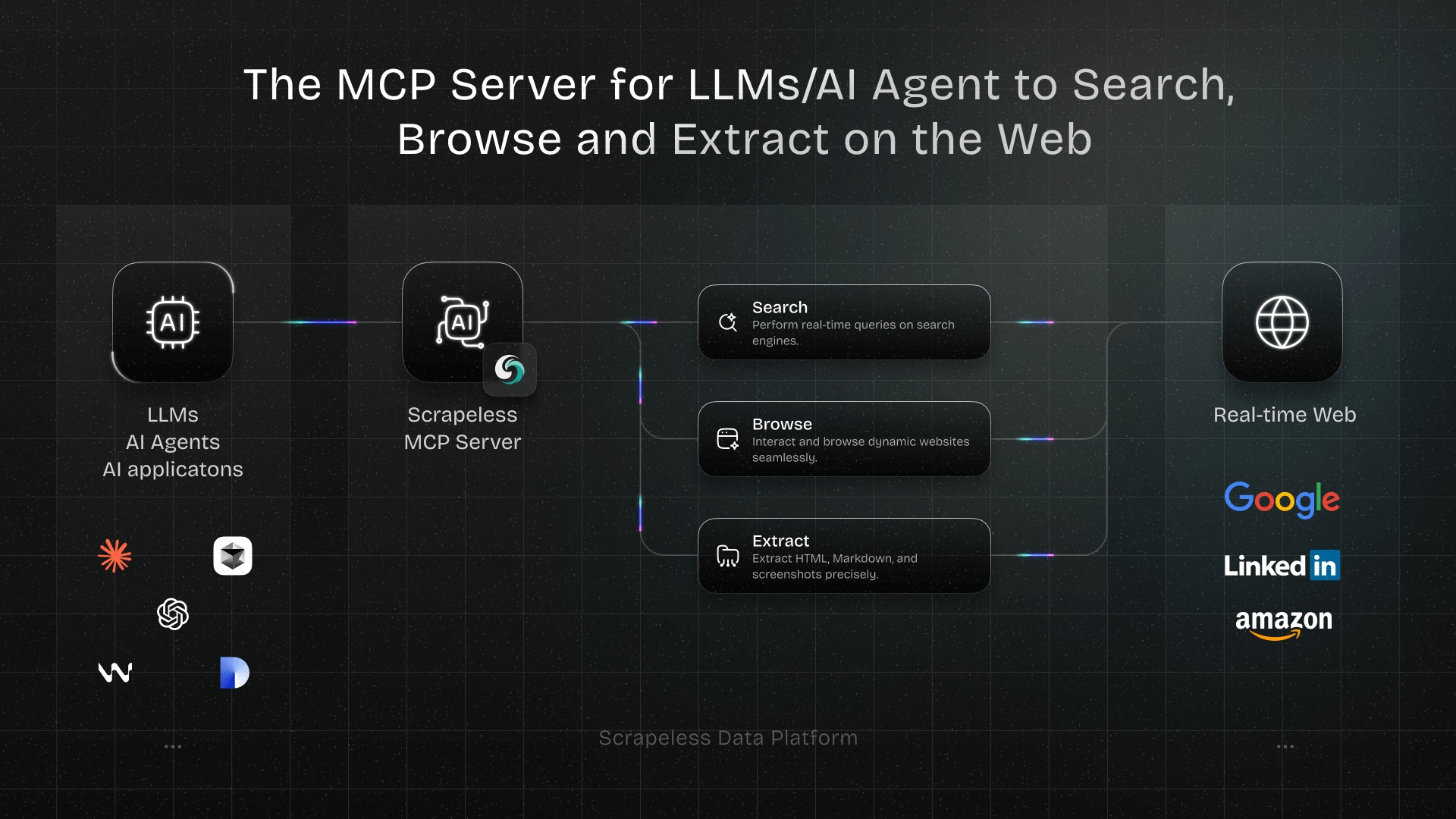
Scrapeless MCP Server 0.6.1 includes optimizations to the server’s scraping workflow. It is designed for developers connecting web search, browser automation, scraping, crawling, and AI-answer collection to MCP-compatible clients.
The official Scrapeless MCP Server repository contains the installation and configuration instructions. If your environment pins package versions, verify the available release and update the configured version deliberately rather than relying on an implicit upgrade.
MCP tools are discoverable by name and described with input schemas, according to the Model Context Protocol tools specification. After updating, refresh or restart the client when necessary so it can read the tool list exposed by the connected server.
For a broader introduction to the integration, see the Scrapeless MCP Server guide.
🌟 Google Search API Adds More Flexible URL Handling
Two additions make Google Search API easier to connect to workflows that already work with search URLs and extracted links.
Pass a Search URL as Input
Google Search API now supports a url input. Instead of reconstructing a request from individual search parameters, an application can pass a supported Google Search URL when that link already represents the intended query context.
This is useful for pipelines that receive complete search URLs from another system. It can reduce application-side parsing and preserve the parameters already encoded in the link. When building or storing these values, use a standards-compliant URL parser so the query string remains intact. The WHATWG URL Standard defines interoperable parsing behavior for URLs.
Convert goto Links
Google Search API now also supports goto link conversion. This gives downstream applications a cleaner way to handle supported navigation links returned with search data, reducing the amount of link-processing logic required after collection.
These additions complement the structured Google Search data available through Deep SerpApi. Review the Deep SerpApi documentation before changing production request validation, especially if your integration currently requires a keyword-based input.
Start Scraping with Scrapeless
Power up your web scraping and automation workflow with Scrapeless!
Sign up today and get $5 in free credit — no credit card required.Claim your free credit now in the Scrapeless Dashboard.
📍 AI Scraper Reliability Improves Across More Regions
AI Scraper received targeted reliability work for less common regions. The improvement is intended to raise collection success where regional demand is lower, helping teams run geographically distributed monitoring and research with more consistent results.
This is a qualitative service improvement rather than a new SLA. Results can still vary by AI engine, prompt, region, and upstream availability. Teams should continue to monitor task status and define appropriate failed-task handling in production workflows.
Google AI Mode Scraper Issue Resolved
An upstream Google AI Mode platform update temporarily disrupted the scraper during the weekend of September 5–6 and increased failed requests. Scrapeless upgraded the service in response, and the issue has been resolved.
No customer-side migration is required for this recovery. If your application retained failed jobs from the affected period, submit those jobs again according to your normal operating policy and contact support if the new request still fails.
ISP Auto-Renewal Arrives in the Dashboard
The Scrapeless Dashboard now includes ISP auto-renewal. The option is intended to help ISP proxy customers maintain continuity without manually renewing each cycle.
Before enabling auto-renewal, review the renewal details shown in your account and confirm that the billing method and service settings match your operational requirements. For current plan information, visit Scrapeless pricing.
💫 Conclusion
This week’s release improves how developers connect search data to automated workflows: MCP Server 0.6.1 refines the integration layer, while Google Search API gains URL input and goto link conversion. Reliability improvements extend AI Scraper performance across more regions, Google AI Mode collection is stable again, and ISP auto-renewal reduces a recurring Dashboard task.
Explore the previous Scrapeless Weekly Changelog for the latest TikTok Scraper, MCP, and Google AI Mode updates.
👀 Ready to Build Your Next Data Workflow?
Connect with developers building public-web data and AI-agent workflows in the Scrapeless community: Discord · Telegram.
Sign up at app.scrapeless.com to get started.
At Scrapeless, we only access publicly available data while strictly complying with applicable laws, regulations, and website privacy policies. The content in this blog is for demonstration purposes only and does not involve any illegal or infringing activities. We make no guarantees and disclaim all liability for the use of information from this blog or third-party links. Before engaging in any scraping activities, consult your legal advisor and review the target website's terms of service or obtain the necessary permissions.